First published on Wednesday, October 15, 2025
Last updated on Thursday, October 16, 2025
Welcome to HR Heartbeat, where we take a look at the week’s most pressing HR and employment law stories. With over a decade of experience working within the HR and employment law industry, I give my opinion on current trends impacting your business, as well as my own personal commentary on all things HR and legal.
When masking rules become a compliance issue
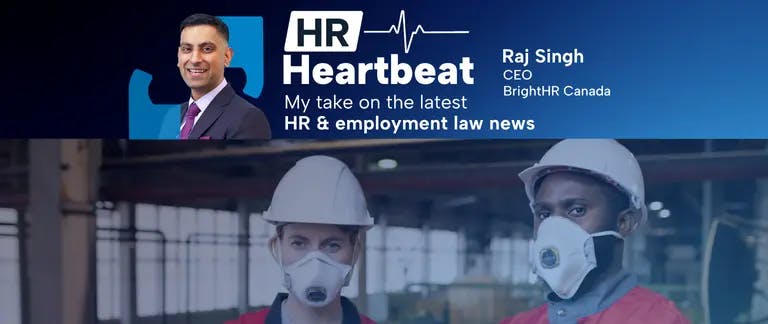
An employer in Manitoba has recently won a case where a worker was terminated for cause after repeatedly refusing to wear a mask at work.
The worker was advised by their doctor to wear a mask after developing a lung condition from dust exposure.
Following recommendations on mask types they could safely use, the business provided the worker with filtered respirators and reassigned them to a less dusty area. But they were often seen not wearing a mask.
After receiving several verbal and written warnings from the employer, the worker was terminated for cause.
Claiming wrongful dismissal, the worker filed a claim, but Manitoba’s Labour Board sided with the employer. They ruled the mask requirement was reasonable and medically supported, and that the worker’s continued refusal—despite clear direction—amounted to just cause for dismissal.
This case is a great example of how employers must cover all bases when handling tricky situations like this especially with terminations for cause. In the end, having clear documentation of accommodations and disciplinary steps, and consistently enforcing their commitment to safety protocols heavily contributed to the Board ruling in favour of the employer.
26 months notice awarded in wrongful dismissal case
A general manager in Alberta has received over $1.5 million in damages following a wrongful dismissal claim. After 34 years with the same electrical company, the worker was fired for being too ‘old school’ for the new direction the company wanted to take.
Despite acknowledging his stellar performance, they dismissed him with no written contract or clear bonus policy in place.
The Court of King’s Bench ruled the termination required exceptional notice due to his long tenure, senior role, age (58), and lack of comparable job opportunities. The Court also found the company owed the worker six weeks of unused vacation pay and annual bonuses.
This employer learned a costly six figure lesson—loyalty and seniority count with courts. Make sure every termination is backed by proper documentation like contracts that clearly outline employment terms or risk hefty payouts far higher than the customary 24-month notice limit.
Employment Insurance (EI) benefits just got a boost
The federal government has announced a temporary EI extension for long-tenured workers. They’ll now get up to 20 extra weeks of benefits, bringing the total to 65 weeks. The measure applies to claims made between June 15, 2025, and April 11, 2026, aimed at easing the impact of a slowing job market.
So, what does this mean for you as an employer? In short—more flexibility. With extended income support, mutual separation agreements or workforce restructures may become easier to handle. Employees are less likely to resist a transition when they know financial assistance will last longer.
It also means business owners will need to make sure their termination paperwork and Records of Employment (ROES) are accurate.
If your HR processes are compliant and transparent, this’ll also make it easier to have difficult conversations around layoffs and restructuring.
And that’s a wrap from me. Tune in next time for my take on the latest headlines and employment law stories, helping keep your business ahead!