First published on Thursday, July 24, 2025
Last updated on Thursday, July 24, 2025
Welcome to HR Heartbeat, where we take a look at the week’s most pressing HR and employment law stories. With over a decade of experience working within the HR and employment law industry, I give my opinion on current trends impacting your business, as well as my own personal commentary on all things HR and legal.
Kiss cam mishaps
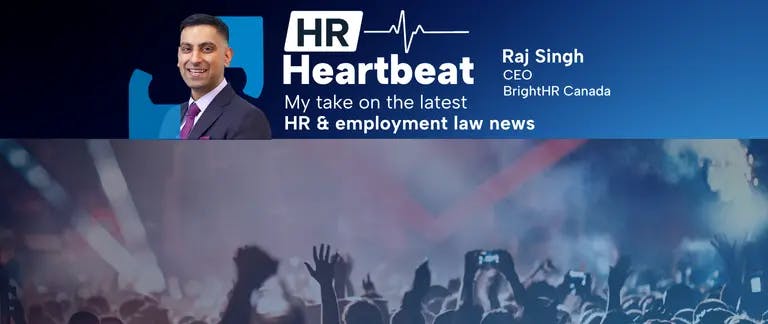
This past week, a viral video from a Coldplay concert has placed the Chief People Officer and CEO of a well-known company under intense public scrutiny after they were caught in a seemingly intimate moment on the venue’s “kiss cam.”
The nature of their relationship remains unclear, but the footage has sparked a lot of speculation, especially since both hold senior positions at their company.
From an HR perspective, this situation brings concerns around perception, policy, and impartiality to light. When senior leaders are seen in a personal light, it leads to questions like: Was the relationship disclosed? Could it lead to perceived or actual bias? Does it conflict with company policies?
It’s important to note that even consensual workplace relationships, especially at top leadership levels, can affect trust, objectivity, and internal processes like hiring, performance reviews, and compensation.
Workplace relationships are extremely common and for companies navigating similar issues, the message is clear: ensure clear policies are in place, apply them consistently at all levels, and if you find yourself having to manage the reputational and operational risks that may follow, it’s always a good idea to get expert advice.
When policies backfire
An arbitrator in BC just sent a clear message to all employers with a recent ruling: if you don’t enforce your policies, you can’t use them as grounds for termination.
A food service worker was fired for theft for taking home expired pastries. But, the arbitrator disagreed, stating that the company poorly enforced their policies.
While the company had a food waste policy, it was inconsistently applied, rarely communicated, and never enforced on night shifts. The employee, unaware of wrongdoing, openly recorded the discarded goods and even offered suggestions to reduce waste.
But what really drove the nail into the coffin was the sloppy investigation. They didn’t record key interview questions, nor attempt to confirm if the worker had ever been trained on the policy.
This case proves it’s not enough to simply have policies. You must clearly communicate, train, and consistently enforce them and investigate fairly if things go wrong.
The termination was deemed excessive; the worker was rehired with full back pay and received only a written warning.
No breaks or bias
In a recent decision, the BC Human Rights Tribunal dismissed a worker’s discrimination complaint, highlighting the importance of disclosure and evidence in accommodation claims.
The worker claimed he was discriminated against by his employer and union due to his diabetes and an unspecified mental disability. He claimed he wasn’t allowed regular snack breaks and was harassed by his foreman.
But here’s the issue, he never formally disclosed his illness to management. He claimed he mentioned it to a foreman (who denied it), and there wasn’t any evidence the employer knew he needed accommodations.
The workers allegations of bullying and harassment weren’t related to his medical condition and the employer had documented non-discriminatory reasons for his termination including safety violations and disruptive conduct.
The tribunal also found his union had offered support and advice on requesting accommodation, which the worker didn’t act on.
There’s a lesson here for both employers and employees alike: accommodation starts with clear communication. Without disclosure, employers can’t be expected to act and unsupported claims won’t stand up in a tribunal.
And that’s a wrap from me. Tune in next time for my take on the latest headlines and employment law stories, helping keep your business ahead!