
First published on Thursday, June 25, 2026
Last updated on Tuesday, June 16, 2026
Today’s workplaces have embraced flexibility, transportation infrastructure has evolved, and technology is advancing at breakneck speed. Yet employee lateness remains a persistent challenge for employers across Canada.
We’ve analyzed fresh data on employee lateness from our clocking-in and lateness tool Blip, and the results are surprising but not unexpected. While traditional causes of lateness reign supreme, there’s also an emerging trend around wellness and scheduling issues contributing to delayed arrivals that’s worth paying attention to.
Let’s dive in and break down every cause, from transportation disruptions to employees attempting to work through illness.
Top Reasons for Lateness
|
Reason |
% Rate of Lateness |
Average Delay (Mins) |
% Rate Change YoY |
Avg Delay Change YoY |
|
Public Transport |
20.4% |
25.7 |
-18.3% |
-33.8% |
|
Oversleeping |
18.3% |
58.1 |
+7.9% |
-16.7% |
|
Traffic |
15.3% |
32.9 |
-1.2% |
+13.8% |
|
Family |
11.7% |
81.9 |
-0.7% |
+7.4% |
|
Car Problems |
8.7% |
66.6 |
-4.8% |
-19.7% |
|
Weather |
7.9% |
57.4 |
-7.2% |
-24.9% |
|
Wellness |
7.9% |
86.2 |
+12.2% |
+80.1% |
|
Scheduling Issues |
4.7% |
75.5 |
+104.5% |
+3.3% |
|
House Problems |
2.8% |
72.3 |
+82% |
+10.4% |
|
Uber / Taxi |
1.2% |
21.2 |
+3.1% |
-69.4% |
|
Pets |
1.1% |
59.6 |
-1.6% |
+98.6% |
Public transport remains the leading cause of lateness
Many Canadian workers rely on public transportation, meaning their ability to arrive on time is often affected by factors outside their control.
Our data shows that public transport issues are responsible for 20.4% of all recorded reasons for lateness. While this marks a notable -18.3% decrease year-over-year, it still remains the single largest contributor.
Encouragingly, the average delay has also dropped significantly by -33.8% to 25.7 minutes.
While it’s a small improvement from last year’s numbers, transportation woes remain one of the biggest barriers to punctuality, especially for employees who rely on buses, trains, streetcars, and subway services to commute. From service disruptions and delays to public disturbances and overcrowding, transportation issues can quickly derail an employee's commute, particularly during peak commuting hours.
Oversleeping continues to be a major contributor to longer delays
Oversleeping accounts for 18.3% of lateness incidents, representing a +7.9% increase from the previous year.
Despite the rise in frequency, the average delay has decreased by -16.7% to 58.1 minutes, indicating that while more employees are oversleeping, they may be recovering and arriving faster than before.
This trend highlights the ongoing challenge of work-life balance and fatigue, particularly in an era of flexible or hybrid work schedules.
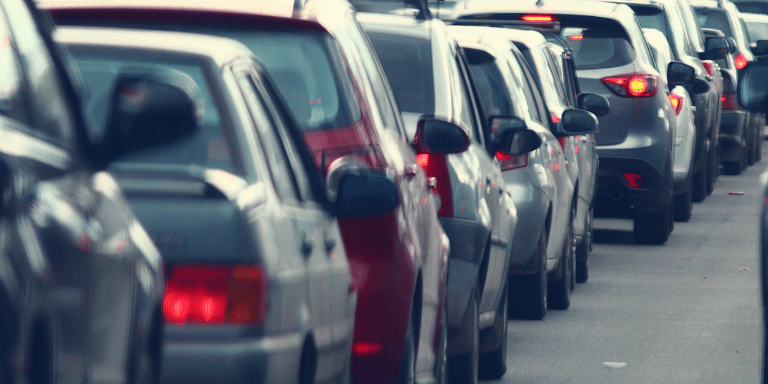
Traffic delays remain steady but are becoming more disruptive
Traffic-related lateness makes up 15.3% of cases, showing a slight 1.2% decline year-over-year.
However, the average delay has increased by 13.8% to 32.9 minutes, suggesting that while fewer employees are citing traffic as a reason, those who are affected are experiencing more severe delays.
Congestion, construction, and unpredictable road conditions continue to impact employees’ drive in to work.
Family responsibilities continue to cause significant delays
Family-related issues account for 11.7% of lateness, remaining relatively stable with a slight 0.7% decrease year-over-year.
However, the average delay has risen by 7.4% to 81.9 minutes, making it one of the more time-intensive causes.
These delays often stem from caregiving responsibilities or unexpected household needs, which can be difficult for employees to plan around and manage.
Car problems are becoming less frequent and less severe
Car-related issues represent 8.7% of lateness cases, decreasing by 4.8% compared to last year. The average delay has also dropped significantly by 19.7% to 66.6 minutes.
This suggests improvements in vehicle reliability or better contingency planning among employees, though breakdowns and maintenance issues still pose occasional disruptions.
Weather-related delays are declining in both frequency and impact
Weather accounts for 7.9% of lateness, down 7.2% year-over-year. The average delay has decreased sharply by 24.9% to 57.4 minutes, indicating that employees may be better prepared to handle adverse conditions.
Despite this improvement, severe weather events can still create unpredictable commuting challenges.
Employees are choosing work over recovery
Wellness-related reasons now make up 7.9% of lateness cases, increasing significantly by 12.2% year-over-year. More notably, the average delay has surged by 80.1% to 86.2 minutes, making wellness the highest delay among all categories.
Rather than taking a full sick day, many employees attempt to work through illness. As a result, they may arrive late due to medical appointments, reduced mobility, or the challenges of managing health concerns while preparing for work.
Scheduling issues are rising fast
Transportation and wellness challenges may be major contributors to lateness, but scheduling mishaps have also started making a name for themselves as one of the fastest-growing causes of employee lateness.
Scheduling conflicts account for 4.7% of lateness incidents, more than doubling with a 104.5% increase year-over-year.
While the average delay has only risen modestly by 3.3% to 75.5 minutes, the sharp increase in frequency points to potential gaps in coordination, communication, or calendar management.
Unlike transportation delays, scheduling issues are often more preventable. With clear communication, accurate workforce planning, and effective scheduling systems, employers can reduce confusion and ensure employees have sufficient notice to organize their commitments outside work.
House problems are increasing in frequency and impact
House-related issues make up 2.8% of lateness cases, rising significantly by 82% year-over-year. The average delay has also increased by 10.4% to 72.3 minutes.
From washroom flooding to stuck elevators, these issues are becoming a more prominent factor affecting punctuality.
Uber and taxi delays are rare but less severe
Ride-hailing services account for just 1.2% of lateness reasons, with a slight 3.1% increase year-over-year. However, the average delay has dropped dramatically by 69.4% to 21.2 minutes, making it one of the least disruptive causes.
Pet-related issues remain minimal but increasingly time-consuming
Pets account for 1.1% of lateness incidents, decreasing slightly by 1.6% year-over-year. Despite their low frequency, the average delay has nearly doubled, increasing by 98.6% to 59.6 minutes.
This indicates that while fewer employees cite pets as a reason, those who do are experiencing significantly longer disruptions, likely due to unexpected or urgent situations.
What employers can learn from the data
So, what can employers take away from these insights? One thing the data makes clear is that lateness is rarely the result of a single factor.
Employees are often dealing with a combination of transportation challenges, wellbeing concerns, scheduling complexities, and everyday commuting obstacles.
When employers make an effort to understand the underlying causes of lateness, it’s easier to make more informed decisions about attendance policies, scheduling practices, wellbeing initiatives, and workforce planning.
And as workplaces evolve, employers who champion flexible business practices, embrace open communication, and support their employees will find themselves in a better position to reduce avoidable lateness issues while maintaining productivity and engagement across their teams.