
Hanaan Parkinson-Ramsbottom
Monday, September 30, 2024
Jump to section
Making a business accessible and safe is one of the most important considerations a business owner must make to employ staff. And this responsibility doesn’t just stop once the business is off the ground. Employers have a legal duty to provide a safe and healthy work environment.
Fire is one of the biggest health and safety risks business owners face. A fire can start in mere seconds, putting lives at serious risk.
Which is why there are strict fire safety regulations all business owners must adhere to. In this guide we explore your legal responsibilities as an employer and the steps you can take to promote fire safety at work.
What is fire safety at work?
Fire safety at work involves practices and precautions designed to reduce fire risk and ensure the safety of employees and visitors. It includes fire prevention measures, emergency procedures, and training employees to respond to a fire.
Every business should have a fire safety plan outlining the steps to prevent fires and protect lives and property. But who is responsible for fire safety in the workplace?
While everyone has a role, employers, business owners, and designated safety officers are ultimately responsible for setting and following fire safety protocols.
The importance of fire safety at work
Ensuring fire safety is essential and cannot be compromised. When lives are endangered, it can lead to complete devastation and loss for a business.
Businesses have and do experience this first hand. In fact, according to the statistics, there are around 22,000 fires in workplaces in the UK every year, most of which are accidental fires caused by a lack of proper fire prevention measures.
Legal responsibilities for fire prevention
In the UK, fire safety law is clear employers must reduce fire risks and ensure safe escape routes. The Regulatory Reform (Fire Safety) Order 2005 and the Health and Safety at Work Act1974 require businesses to regularly assess and manage fire risks. Ignoring these rules could lead to fines or, worse, imprisonment.
As an employer you are required to:
Carry out regular fire risk assessments by a competent person
Inform employees of identified risks and actions taken
Provide and maintain fire safety equipment
Conduct regular fire drills
Train employees on fire safety procedures, including evacuation plans
Keep fire safety records
Legal updates are common across health and safety, so it is vital that you stay up to date with the latest legislation. To understand your legal duties, do not hesitate to reach out to a qualified H&S advisor. The team are available 24/7 to provide legal advice, documentation support and more.
Identifying fire hazards and risks
Regular fire risk assessments are crucial for identifying and mitigating potential fire hazards before they escalate into serious incidents. These assessments involve identifying fire hazards, assessing who might be at risk, evaluating the risks, and developing a plan to address them. The goal is to prevent fires by eliminating or reducing the factors that can cause them: heat, fuel, and oxygen.
Common fire hazards include:
Overloaded electrical outlets
Improperly stored flammable materials
Blocked emergency exits
Faulty wiring or malfunctioning appliances
Combustible materials near heat sources
Your workplace is unique, so your fire risk assessments should be too. The Health and Safety Executive (HSE) recommends reviewing your risk assessments regularly, mainly when significant changes occur in your workplace, such as new equipment or changes in layout.
BrightSafe's risk management solution can help you conduct tailored assessments and ensure nothing is overlooked. Just, remember that a competent person must conduct the fire risk assessment.
Implementing fire safety measures and emergency procedures
Once you've identified potential fire hazards, it's time to implement fire safety measures. These steps should include:
Fire detection and warning systems: Ensure your workplace has smoke detectors and fire alarms.
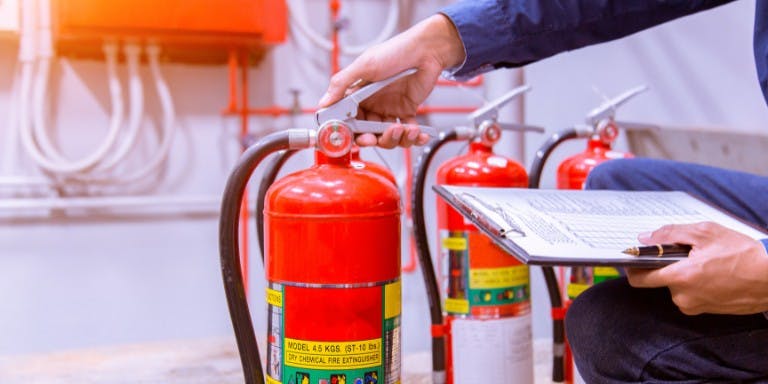
Fire extinguishers: Place fire extinguishers in easily accessible locations and regularly check that they're in working order.
Emergency evacuation plans: Develop clear evacuation plans and practice regular fire drills so employees know exactly what to do in an emergency.
Communicating these procedures to all employees is essential to ensuring everyone is prepared for a fire emergency.
Promoting fire safety awareness and training
You can have all the equipment and procedures in place, but it's only useful if your employees are trained to use them. That's why fire safety training is so necessary.
You can provide this with simple, easy-to-access online health and safety training courses. Covering the essentials for employees and managers.
Make sure your team knows how to:
Use fire-fighting equipment
Ensure employees can confidently use fire extinguishers and other tools.
Follow evacuation procedures
Conduct regular evacuation drills so employees know the fastest, safest ways to exit the building.
Practice fire safety best practices
Promote a fire safety culture by encouraging employees to report potential hazards and take steps to prevent fires.
By fostering a proactive safety culture, you'll reduce the chances of fire incidents and ensure quick responses when they do happen. The Health and Safety Executive (HSE) also advises that employees are regularly updated on changes to fire safety protocols and trained accordingly.
Maintaining fire safety over time
Fire safety isn't a one-time task—it requires regular upkeep:
Regular maintenance of fire safety equipment is crucial.
Smoke detectors, fire alarms, and extinguishers should be inspected and maintained on a regular basis to ensure they function effectively when needed.
Periodically review fire risk assessment
Revisit your fire risk assessments regularly, especially after changes to your workplace, to keep them up to date.
Stay updated on the current fire safety legislation
Laws and fire safety regulations change. Stay informed and make sure your business remains compliant.
Regularly reviewing your fire safety policies and equipment ensures they remain effective. This includes updating risk assessments when introducing new machinery or equipment that could alter fire risks. Plus, be sure to have the right insurance as a safety net for your business.
Health and safety management software for fire safety
Managing fire safety can feel like a big task, but health & safety software makes it more accessible. With BrightSafe's health and safety software, you can easily stay on top of fire safety regulations and manage your responsibilities.
Here's how we help:
Never miss a maintenance check—BrightSafe helps you stay on top of equipment inspections and other critical safety tasks
Get updates on the latest fire safety regulations and 24/7 advice to and ensure your fire safety complies with UK law
Train your staff from day one on important health and safety procedures, including fire safety regulations with health and safety e-learning.
Ready to make fire safety easier and more effective? Book a demo with BrightSafe today and take the first step toward a safer workplace.