
Hanaan Parkinson-Ramsbottom
Friday, September 29, 2023
Jump to section
In this guide we explore the ‘must-know’ fire safety regulations across the country, the role business owners and managers play in complying with the law, and how having a health and safety system in place to record risk assessments, log incidents, and track compliance actions can help ensure fire safety responsibilities are properly managed.
The Regulatory Reform (Fire Safety) Order 2005
The foundations of fire safety in both England and Wales. The Regulatory Reform (Fire Safety) Order 2005, or put simply the FSO, sets out exactly what employers and people in control of buildings must do to reduce fire risks and keep people safe in the workplace.
As an employer you must:
Conduct thorough fire risk assessments by a compliant person
Implement essential fire safety measures
Plan for emergency evacuations
Provide relevant training and information to staff
Assign the role of a ‘responsible person’ for the workplace (you can also have multiple persons across a building to assist with evacuations, risk assessments and inspections).
Ensure proper maintenance of fire safety equipment
Keep accurate records and documentation of all necessary information related to workplace fire safety (if an office is in a shared premise they can share the plans & responsibilities with other offices and businesses within the same property)
Updated fire safety regulations
Recent legislation, such as the Fire Safety Act 2021 and Fire Safety (England) Regulations 2022, were implemented to improve fire safety in residential buildings especially in multi-occupant properties and to close the gaps that existed in earlier legislation (fire safety order 2005).
These updates were directly linked to the Grenfell Tower inquiry, after 72 people were killed in a residential apartment building in London.
The primary modifications to fire safety regulations include:
Bolstering fire safety measures
Updating fire safety guides
Verifying the proficiency of fire risk assessors
Disseminating relevant fire safety instructions
Guaranteeing regular reviews and documentation of fire risk assessments
These modifications improve fire safety across various premises, in compliance with the Building Safety Act, ranging from high-rise residential buildings to commercial properties.
The role of Responsible Persons (RPs)
Responsible Persons (RPs) play a vital role in ensuring fire safety in buildings regulated by the Fire Safety Order. The Fire Safety Act requires Residential Property (RP) owners to manage and reduce the risk of fire from multi-occupied residential buildings. This includes:
The structure and external walls
Cladding
Balconies
Windows
Entrance doors to individual flats that open into common parts
Fulfilling these duties is essential to protect occupant safety and prevent fire related accidents is equally important. Competent assessors must have the necessary qualifications, training and expertise to carry out thorough and identify potential hazards.
In addition, sharing fire safety information with residents ensures that all occupants are aware of emergency procedures. Understanding the evacuation routes and how to react in the event of fire.
Enforcement of legislation
Unlike employment laws or health and safety legislation, fire safety legislation is not enforced by one single organisation. Instead, this responsibility lies with the local Fire and Rescue Authorities (FRAs). This will be your nearest fire brigade or fire service. Of which you can find details of using your postcode or address with FireEngland.
Your local FRA has the power to conduct fire safety inspections of your premises and issue notices including prohibition notices if serious risks are found. They also work closely with the Building Safety Regulator, which is responsible for overseeing and setting standards for certain building safety regulations.
Essential fire safety measures
From detection to firefighting equipment, fire safety measures aim to reduce the impact of a fire if one occurs. The following measures should be installed and maintained to a high standard throughout workplaces:
Smoke alarms and detectors
Clearly labelled fire exits
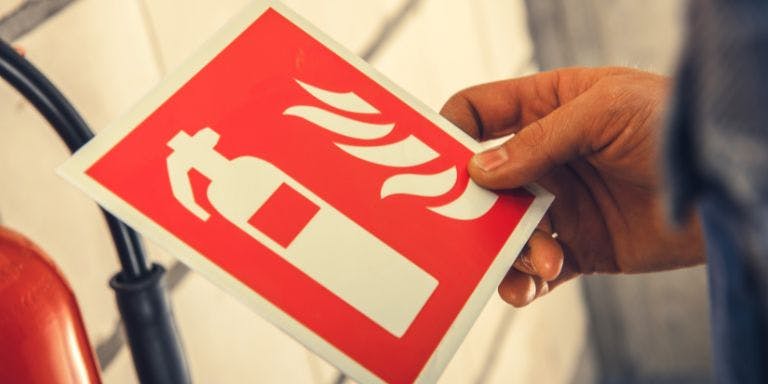
Fire extinguishers
Accessible fire exits for all staff
Fire doors
Other measures may include the use of building-wide sprinkler systems, fire blankets, fire hoses, foam equipment (suitable for liquid fires), emergency lighting, and protective clothing.
Other relevant legislation relating to fire safety at work
Fire safety falls under a number of other crucial pieces of legislation in the UK. This includes the Health and Safety at Work Act 1974, which, you will likely be very familiar with.
The Act details the general requirements for employers to provide both a healthy and safe workplace for staff. Including the legal duty to implement fire safety measures.
The HSE also list The Dangerous Substances and Explosive Atmospheres Regulations 2002 as another relevant legislation. Covering regulations on the safe use of extremely flammable substances such as Acetylene. This requires workplaces where dangerous and flammable substances are used to be stored and used as directed.
You may also wish to refer to the:
For more information on the fire safety of your business premises.
Fire doors in the workplace
Fire doors fall under building safety regulations and are now considered an essential measure in reducing the risk of fire spreading.
After the Grenfell tragedy, the government placed greater emphasis on the need for proper, routine maintenance of fire doors. Requiring responsible personnel to ensure:
Doors are not damaged
Gaps are sealed
Hinges and seals around the door are correctly fitted
The door is capable of opening and closing correctly
Fire doors are placed in all doorways leading to escape routes and are a requirement for rooms at higher risk of fires.
From January 2023 it is a legal requirement for fire doors to be inspected quarterly for high rise multi-occupied residential buildings in England. Meanwhile commercial buildings should have fire doors inspected at least every 6 months.
While they can last between 10-15 years, regular flow of traffic through a fire door can result in wear and tear. Wear and tear which will reduce how effectively the fire door reduces impact. It is therefore important to conduct thorough inspections and checks on these doors regularly to spot the signs of damage and wear and tear early.
Stay compliant with fire safety regulations with BrightSafe
Want to make sure you’re compliant with the latest fire safety regulations? BrightSafe, has you covered!
With our team of advisors available 24 hours a day, there’s never a bad time to give us a call. The health and safety advisors can provide you with the advice you need to stay compliant.
What’s more, BrightSafe features an array of H&S document templates so you can meet your legal obligations and keep up to date with documentation.
With BrightSafe, health and safety management is made easy!
Discover the features and tools our health and safety management software provides businesses in a free demo, or get more information from our handy expert guides.