First published on Wednesday, October 21, 2026
Last updated on Wednesday, October 21, 2026
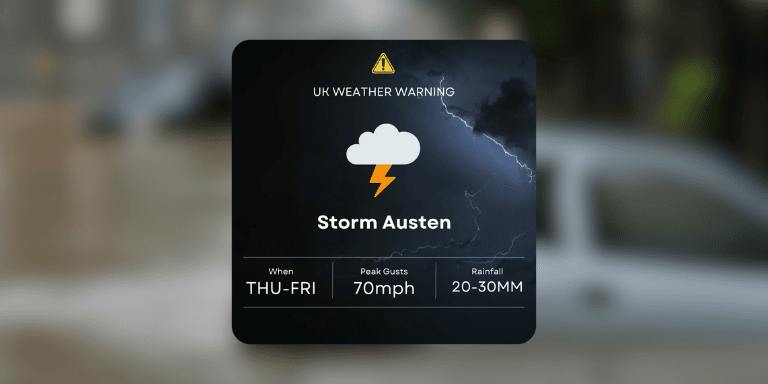
Storm Austen is putting severe weather preparations firmly on the agenda for UK business owners. Here's how BrightHR can help you protect your employees, manage disruption and keep your business running.
With strong winds and heavy rain forecast for parts of the UK later this week, employers should be thinking about more than the weather outside.
Reminiscent of Storm Darragh in 2024, Storm Austen, is likely to have some impact on the usual routine.
Disrupted commutes, unexpected staff absences, changing shifts and workplace safety risks can all create challenges for businesses. And when the forecast changes quickly, knowing who's available, what needs doing and where to get advice becomes even more important.
While you can't control the weather, you can take steps to manage its impact on your business.
Here's how BrightHR can help you prepare for Storm Austen.
1. Protect your employees with risk assessments
Strong winds and heavy rain can create workplace hazards, particularly for businesses with outdoor workers, exposed premises or employees travelling between sites.
Loose equipment, slippery surfaces, falling objects and unsafe access routes may all need attention before conditions deteriorate. Plus, employers must consider how adverse weather affects staff safety and their health & safety responsibilities. This includes providing suitable personal protective equipment (PPE) where necessary, such as weather-resistant clothing and appropriate footwear for employees working outdoors.
With risk assessment software, you can:
Create and manage workplace risk assessments using ready-made templates.
Keep important health & safety documents organised and accessible.
Record workplace incidents and maintain supporting information.
Access health & safety guidance and training resources.
Whether you're managing a construction site, a retail premises or a hospitality business, reviewing relevant risks before severe weather arrives can help you make safer decisions.
Using health & safety software can also help you identify potential hazards and plan appropriate control measures before severe weather arrives.
2. Manage unexpected staff absences
One of the biggest challenges during severe weather is knowing whether your employees can get to work.
Road closures, cancelled trains and dangerous travel conditions can leave businesses short-staffed with little warning.
Rather than relying on scattered messages and manual spreadsheets, BrightHR's HR software helps you manage staff absences and keep track of employee availability.
You can:
Record employee absences and lateness.
View staff availability in a shared calendar.
Keep absence information in one place.
Identify employees who may be available to cover shifts.
Having an accurate picture of who's working can help you respond more quickly when plans change.
If you're unsure how to handle weather-related absences, read our guide on what happens if staff can't get to work during a storm.
3. Adapt rotas when the forecast changes
Severe weather doesn't always mean closing your business. Sometimes it means changing how you operate.
A morning shift may need additional cover. Employees might need to finish early. Or you may have to reorganise staffing around travel disruption.
With rota software, you can manage employee schedules and adjust rotas around staff availability.
That means less time trying to reorganise staffing manually and more time focusing on keeping your business running safely.
For businesses in hospitality, retail, healthcare and other shift-based sectors, flexible scheduling can be particularly valuable when weather conditions become unpredictable.
4. Track working hours
When employees arrive late, leave early or work different hours because of severe weather, accurate time records become important.
A clocking-in app helps businesses record when employees start and finish work.
With Blip and BrightHR's timesheet tools, you can:
Record employee clock-in and clock-out times.
Keep track of hours worked.
Review working-time records.
Reduce reliance on manual timesheets.
Whether employees are working their usual shifts or adapting to changing conditions, having reliable attendance records can make administration easier.
5. Get support with difficult HR decisions
Severe weather can raise complicated questions about employment contracts, workplace policies and employee rights, often requiring businesses to make quick HR decisions to minimise disruption to operations.
Where roles allow, working from home can be a practical way to keep your business running during severe weather. Employers should consider whether employees have the equipment and resources needed to work safely and effectively from home.
As every workplace is different, it's important to review employment contracts and workplace policies before making decisions about pay, absence or temporary closures.
Having access to reliable HR advice, tools and resources can help you understand your responsibilities and manage difficult workplace situations with greater confidence. With BrightHR, employers can access support from a team of experts through the 24-hour employment law advice line.
6. Put a severe weather policy in place
Preparing for disruption shouldn't begin when the first employee calls to say they can't get to work.
A clear severe weather policy can help employees understand what they should do when conditions affect their journey, workplace or normal working arrangements.
Your policy should consider:
How employees report weather-related absences or lateness.
Who makes decisions about workplace closures.
Whether alternative working arrangements are possible.
How staff will receive updates during disruption.
How pay and leave arrangements will be handled.
BrightHR offers a free severe weather policy template to help businesses get started.
Having a clear policy in place before severe weather arrives can help reduce confusion and support more consistent decisions.
Storm Austen: Your business preparation checklist
Before severe weather reaches your area, consider these six steps:
Check official weather warnings. Follow the Met Office for updates relevant to your business locations
Review workplace risks. Use health & safety software to help organise relevant risk assessments and safety information.
Confirm employee availability. Keep track of absences and staff availability
Prepare alternative rotas. Identify possible shift cover and review whether working arrangements need to change
Communicate your plans. Explain who employees should contact and how decisions will be shared.
Review your severe weather policy. Make sure managers understand the relevant procedures and know where to seek advice.