First published on Monday, November 16, 2026
Last updated on Monday, November 16, 2026
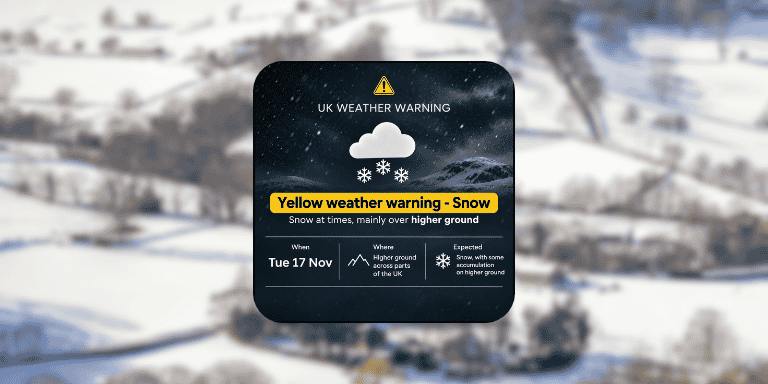
A yellow warning for snow is in place on Tuesday 17th November 2026. Parts of North West England, South West Scotland and the Lothian Borders are covered, including areas such as Lancashire, Cumbria, Durham and Yorkshire.
The Met Office expects snow mainly on ground around 100–200 metres above sea level or higher. Some major roads and railways are likely to be affected, causing disruption to workers and businesses.
Employers should already have risk management procedures and policies in place to protect staff during severe weather. However, here are a few additional health & safety tips to help businesses prepare for overnight snowfall.
What does a yellow weather warning mean?
A yellow warning means the weather could affect everyday activities, but its impact will not be the same everywhere. Warning colours reflect both the potential impact and how likely it is to happen.
This latest yellow weather warning has been marked as having a high (50-75%) likelihood and a moderate impact.
Employees who may be affected by snow fall
Commuters travelling to work
Staff travelling from rural or higher ground may face different conditions than colleagues near the workplace. Businesses should anticipate delays without assuming everyone can safely make the same journey. In conditions deemed unsafe to travel, where possible, employers may consider home working or adjusting working hours as a temporary solution to keep staff safe.
If you have a lateness policy in place, it would be useful to remind staff of the correct procedure to follow if they are affected by bad weather during their commute.
Lone workers
Working alone can make it harder to get help if something goes wrong. Before staff set off for isolated sites or visits, review whether the work can be completed safely in the forecast conditions.
To ensure the safety of a lone worker during bad weather, employers should follow these steps:
Confirm each worker’s location, planned movements and expected finish time
Agree regular check-ins and name the person responsible for responding if contact is missed
Test communication and emergency arrangements, including what happens if a phone loses signal or power
Set clear limits on tasks that can be done alone, and rearrange work if risks cannot be adequately controlled
Review lone worker risk assessments to ensure formal procedures are in place to support lone worker safety
Drivers
For those who drive for work such as delivery drivers and field-based staff, a delayed arrival is not the only issue. Employers should assess whether journeys are safe, follow local travel advice, and consider alternatives before work begins.
Review routes across higher ground, adjust delivery or appointment expectations, and allow for safer but longer routes and additional breaks. Postpone journeys that cannot be made safely rather than expecting drivers to keep to their usual schedule.
Outdoor workers
The HSE warns that weather can affect both health and the ability to work safely, including when handling machinery.
While there is no legal minimum outdoor working temperature, the HSE advises employers to implement protections for workers when working outdoors, such as:
Personal protective equipment and clothing
Warm spaces to take breaks and warm up
Hot food and drinks
Training courses for staff to spot the early signs of cold stress and hypothermia
For more information on legal working temperatures, read the article by BrightHR.
What should employers do before the snow falls?
Before the snow falls overnight, take some time to agree a plan for staff safety.
Check the forecast: review the latest warning for workplace locations, work sites and travel routes
Review the work tasks: identify journeys and tasks that need changing, delaying or stopping if conditions become unsafe.
Brief managers and staff: explain reporting arrangements, available working alternatives and who will make safety decisions. This includes reviewing HR policies and procedures if employees need to call in absent or late from work.
Check lone-worker arrangements: confirm check-ins, emergency contacts and the response to a missed check-in.
Prepare outdoor teams: confirm suitable equipment, warm-up facilities and rest breaks.
Keep reviewing: reassess plans as forecasts and local conditions change.
This yellow warning applies to particular areas of the country, and weather conditions can change quickly. So, it's important for employers to stay informed and keep an eye on the forecast.
BrightHR is here for you, whatever the weather!
To find out how Health & Safety software can help you support workplace and employee safety, speak to a member of the BrightHR team today or book your free demo.