
First published on Wednesday, August 26, 2026
Last updated on Wednesday, August 26, 2026
What makes a good manager?
We asked the Reddit community, ‘What did the best manager you’ve ever worked with do differently?’, and here’s what they had to say. Based on a review of approximately 294 employee comments, the answer is not simply technical expertise or authority.
Employees consistently value managers who build trust, remove obstacles, communicate clearly, support career growth, and treat people with respect.
The findings reveal a clear pattern: the best managers act as trust-based enablers.
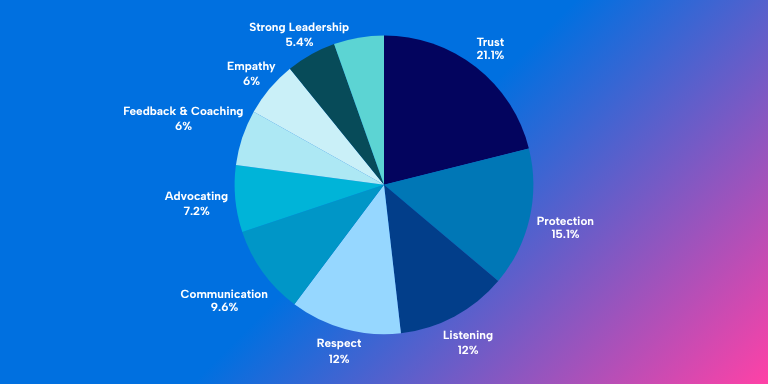
They provide direction and support without micromanaging, protect their teams from unnecessary pressure, and give employees the autonomy to do their best work. The categories overlap, meaning a single comment may mention several management traits.
1. Trust and autonomy
Around 35% of the responses mentioned these.
Trust and autonomy were the most frequently mentioned qualities of a good manager. Employees repeatedly described the best managers as people who gave them ownership, avoided unnecessary oversight, and trusted them to complete their work professionally.
Good managers establish clear expectations, provide the resources employees need, and then allow them to decide how to achieve the result. They do not require constant status updates or approve every minor decision.
What this looks like in practice:
Give employees ownership of projects and decisions
Focus on outcomes rather than activity monitoring
Avoid excessive approvals and excessive reporting
Step in when support is needed, not simply because you can.
Trust experienced employees to use their judgment
2. Removing obstacles and protecting the team
Roughly 25% of responses mentioned these terms.
Many employees said the best managers shielded their teams from unnecessary bureaucracy, office politics, conflicting demands and senior leadership pressure. Rather than passing organisational stress down to employees, these managers absorb it and create space for the team to focus.
This does not mean hiding or gatekeeping important information, it means that they communicate what the team needs to know while filtering out distractions that do not help employees succeed.
Examples include:
Removing blockers that prevent work from progressing.
Managing escalations through appropriate channels.
Protecting employees from unreasonable or conflicting requests.
Taking responsibility for external pressure.
Making sure employees have the tools, access, and resources they need.
3. Listening and being available
Around 20% of employees valued feeling heard.
Employees value managers who listen carefully and make time for meaningful conversations. Availability was especially appreciated when it was supportive rather than intrusive.
A good manager does not need to attend every meeting or provide an immediate answer to every problem. Instead, they create confidence that help will be available when it is genuinely needed.
Strong listening also means paying attention to concerns, asking thoughtful questions, and acting on feedback where possible.
4. Respecting employees and treating them like adults
Approximately 20% said they appreciated feeling trusted and respected.
Respect was one of the strongest underlying themes in the comments. Employees want to be treated as capable adults rather than as problems to be solved.
This includes respecting professional experience, personal responsibilities, different working styles, and the need for flexibility. It also means avoiding condescension, public embarrassment, unnecessary suspicion or excessive monitoring.
Basic respect might sound simple, but many employees described it as a defining difference between a good manager and a poor one.
5. Communicating clearly and setting expectations
This was key for around 16% of responses.
Clear communication helps employees understand what matters, what needs to happen next, and how their work contributes to broader business goals.
Employees particularly valued managers who explained the reasoning behind decisions instead of providing unexplained instructions. Context makes difficult decisions easier to understand and helps people prioritise effectively.
Good communication could look like:
Priorities and deadlines explained
Setting realistic expectations
Using descriptive, useful communication
Explaining the reasons behind important decisions
Clarifying how individual work supports team and business objectives
6. Advocating for employees
Around 12% of respondents felt this was good management
Employees strongly remember managers who actively support their career progression. This includes advocating for promotions, career development, recognition and challenging assignments.
A manager’s support can have an impact well beyond the employee’s current role. Several comments described managers who helped people build skills, become more visible to senior leaders, or move toward a career path they hadn’t previously considered.
Effective managers do not treat employee development as an occasional conversation. They look for opportunities to help people grow over time.
7. Providing constructive feedback and coaching
A small, but impactful task – manager feedback – was mentioned by 10% of respondents.
Employees value honest feedback when it is specific, actionable, and delivered with respect. The most effective managers help people improve without making them feel humiliated or incapable.
Coaching-oriented managers often ask questions rather than immediately giving solutions. This approach helps employees develop their own judgment and become more confident in solving problems independently.
Constructive feedback should clarify:
What’s working well
What needs to improve
Why the improvement matters
What the employee can do differently
Support or resources that are available
8. Showing empathy and genuine care
Roughly 10% of responses mentioned empathy.
Employees appreciate managers who recognise that work is only one part of a person’s life. Empathetic managers take personal circumstances, family responsibilities, stress, health, and individual goals seriously.
Genuine care doesn’t mean lower standards, making exceptions to policy or avoiding difficult conversations. It means handling those conversations with humanity and understanding.
Small actions can make a meaningful difference, such as asking how someone is doing, respecting personal commitments, or offering flexibility during a difficult period.
9. Leading by example
Around 9% stated that managers who ‘lead from the front’ created a positive working environment.
Employees respect managers who demonstrate the standards they expect from others. This may involve working alongside the team during a crisis, taking responsibility for failures, or showing a willingness to perform difficult tasks when necessary.
Leading by example builds credibility. A manager who stays calm under pressure, shares credit, and supports the team is more likely to earn genuine commitment than one who simply gives instructions.
10. Recognising performance, applying fairness, and maintaining accountability
Approximately 9% said ‘fairness’ and recognition were signs of good management..
Good managers balance support with accountability. They recognise strong performance, address problems fairly, and apply standards consistently.
Employees value public recognition for good work and private, respectful conversations about performance issues. They also appreciate managers who take responsibility when things go wrong and give the team credit when things go well.
This combination creates a culture where people understand what is expected and feel that their contributions are noticed.
Want to read more about different management styles to find one that works for you? Check out our article.