First published on Friday, July 24, 2026
Last updated on Thursday, June 25, 2026
Welcome to HR Heartbeat, where we take a look at the most pressing HR and employment law stories. With over a decade of experience working within the HR and employment law industry, I give my opinion on current trends impacting your business, as well as my own personal commentary on all things HR and legal.
AI is changing how businesses make decisions
Artificial Intelligence agents have been in the news a lot recently, with a lawsuit against Meta raising important questions for Canadian employers about the risks of using artificial intelligence (AI) in workplace decisions, including layoffs and terminations.
The case claims recent mass layoffs were influenced by AI-driven systems that used productivity data and performance rankings to pick who would be let go. Some of these included employees who had taken medical, parental, or family leave.
Meta denies these claims, but the situation highlights the growing concern that AI tools can create human rights risks if they rely on incomplete or biased information.
While this case happened in the U.S, I’d like to remind Canadian employers this. AI should support decision-making, not replace it. You remain responsible for making sure all decisions in your business are fair, documented, and free from discrimination.
Before going along with AI recommendations, do a quick pulse check with these questions.
What data is AI using to make recommendations?
Are protected leaves, accommodations, or other human rights factors influencing results?
Is there human oversight before decisions are made?
As we embrace AI and it becomes more common in the workplace, you’ll need strong policies, clear accountability, and proper oversight to avoid costly mistakes. The technology may be new, but your responsibility remains the same.
If your team works at height, this Ontario update matters
If you’re an employer in Ontario, the province is proposing new occupational health and safety rules for rope access work that could affect construction, agriculture, window cleaning, and other industries where employees work at height.
If the regulations come into force, employers would need to ensure all rope access workers and supervisors hold recognized Industrial Rope Access Trade Association (IRATA) or Society of Professional Rope Access Technicians (SPRAT) certification. The proposal also means new compliance requirements may come in, including submitting electronic notifications to the Ministry of Labour at least 24 hours before work begins, completing detailed risk assessments, and developing written, site-specific work and rescue plans.
If you’re an employer who’ll be affected by these changes, you’ll need to review current safety procedures, confirm worker certifications, and update documentation before any rope access work takes place.
While the regulations are still proposed, Ontario employers should start preparing now to avoid being caught off guard. Reviewing your health and safety processes early can help ensure you're ready if these new obligations become law.
WorkSafeBC's reminder: heat, smoke, and sun aren't waiting for a plan
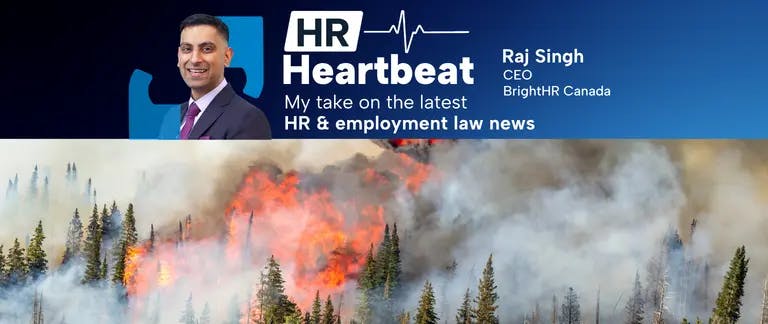
With hundreds of wildfires active across Canada, WorkSafeBC is reminding employers to be mindful of risks associated with summer weather and wildfire season before conditions become hazardous.
Having a plan in place (including a Joint Health and Safety Committee) before heatwaves or smoky skies appear helps keep your staff safe and protects them from having to work in hazardous conditions. Plus, WorkSafeBC officers will be checking this summer that employers have assessed these risks and put controls in place.
They'll be focusing on these three hazards:
Heat stress. This is common among outdoor workers in construction, agriculture, and transportation, but many employers forget it can also affect indoor workers in kitchens, warehouses, and manufacturing facilities without air conditioning. If your staff work in such conditions, you're expected to provide water, shaded recovery spots, and rest breaks.
Wildfire smoke. Recent wildfire activity has emphasized why it's important that smoke be treated as a formal hazard. Employers are expected to monitor air quality, adjust schedules, and ensure respirators are properly fit-tested to protect employees from its effects.
UV exposure. Outdoor workers are 3.5 times more likely to develop skin cancer than indoor workers. Employers are expected to monitor UV index, provide shade and sunscreen, and ensure protective clothing is available.
Keeping up with all of this may seem overwhelming, but as a Canadian employer, it's your responsibility to keep your workers safe. With the right support, and a documented plan made well before the heat hits, your business and workers will be protected when WorkSafeBC officers show up for an inspection.
And that’s a wrap from me. Come back next time for my take on the latest headlines and employment law stories, helping keep your business ahead!